Comment by Toshi Uemura, Executive Officer and Head of Industrial Print, Konica Minolta Business Solutions Europe

In a new year with a focus on EU packaging mandates, global supply shifts, and rising consumer demand for sustainability, digital printing will be a mainstream driver in labels, packaging, and embellishment. At the same time, it will reshape how converters rethink possibilities.

Global digital label output is forecast to accelerate sharply in the next few years, driven by sustainability imperatives, technology innovation, and a buoyant consumer goods sector. These themes were outlined in this recent blog marking a decade of progress in labels.  

Following on from predictions made a year ago – covering AI and automation, smart labels and digital, and a shift towards premiumization in food/beverages - we believe there are four key additional trends in 2026 that will be influencing consumer, brand, and label converter thinking.

Trend 1: Regulation-Driven Design

2026 marks the full implementation of the EU Packaging and Packaging Waste Regulation (PPWR), effective since February 2025. This milestone requires brand owners and label converters to rethink packaging and integrate design-for-recycling principles, source certified materials, and implement smart tracking systems to meet circulatory goals. It’s a crucial step forward towards the EU’s goal of making all packaging recyclable in an economically viable way by 2030.

Compliance will now demand proactive circularity. This will integrate recyclability, reuse, and transparency from the outset. Digital label production is well placed to support this shift, offering lower waste, efficient short runs, and traceability. Converters with certified materials, design-for-recycling capabilities, and smart tracking systems will be at the forefront of this transition.

Trend 2: Extended Content Labels (ECLs) Take Center Stage

With regulatory requirements tightening across sectors, Extended Content Labels (multi-layered or booklet-style) are seeing exponential growth. ECLs enable manufacturers to include complex regulatory, multilingual, or safety information within limited packaging space. These are essential for industries such as pharmaceuticals, cosmetics, and chemicals.

Pharmaceutical demand is accelerating as aging populations, globalized supply chains, and new drug approvals expand labeling needs. The pharmaceutical labeling market is projected to surpass $9 billion by 2033 (CAGR 5%, 2023–2033), according to a Pharmaceutical Labeling Market 2025-2033 report from analysts Research and Markets. Rising safety standards, patient-centric packaging, and advances in digital printing technologies will sustain this momentum.

Trend 3: Compact, Agile Production Lines

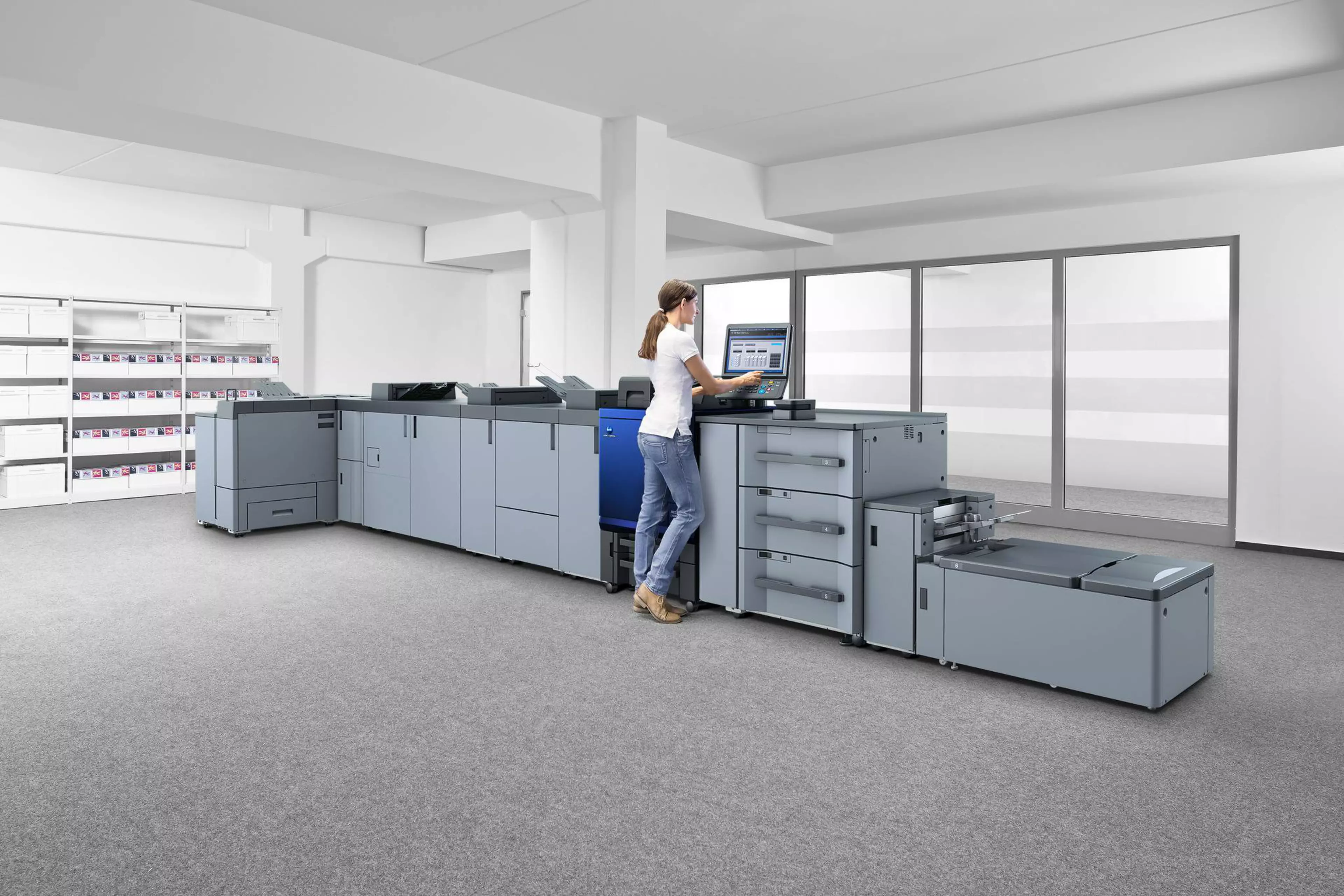
At Labelexpo Europe 2025, Konica Minolta unveiled the prototype of a new AccurioLabel press featuring an in-line IQ unit for automated quality control. This was part of a broader focus on enabling converters to take or investigate their first steps into digital, unlock new market opportunities, and bring outsourced work back in-house.

Integrated production lines showcased at the record-breaking show highlighted solutions for high-growth sectors. These include retail, pharmaceuticals, and logistics. Future-ready systems will simplify onboarding, speed up versioning, and enable agile job switching. Converters will embrace compact, connected, and highly responsive production environments to meet the demand for shorter runs and faster turnaround times.

Trend 4: Digital Printing’s Accelerated Ascent

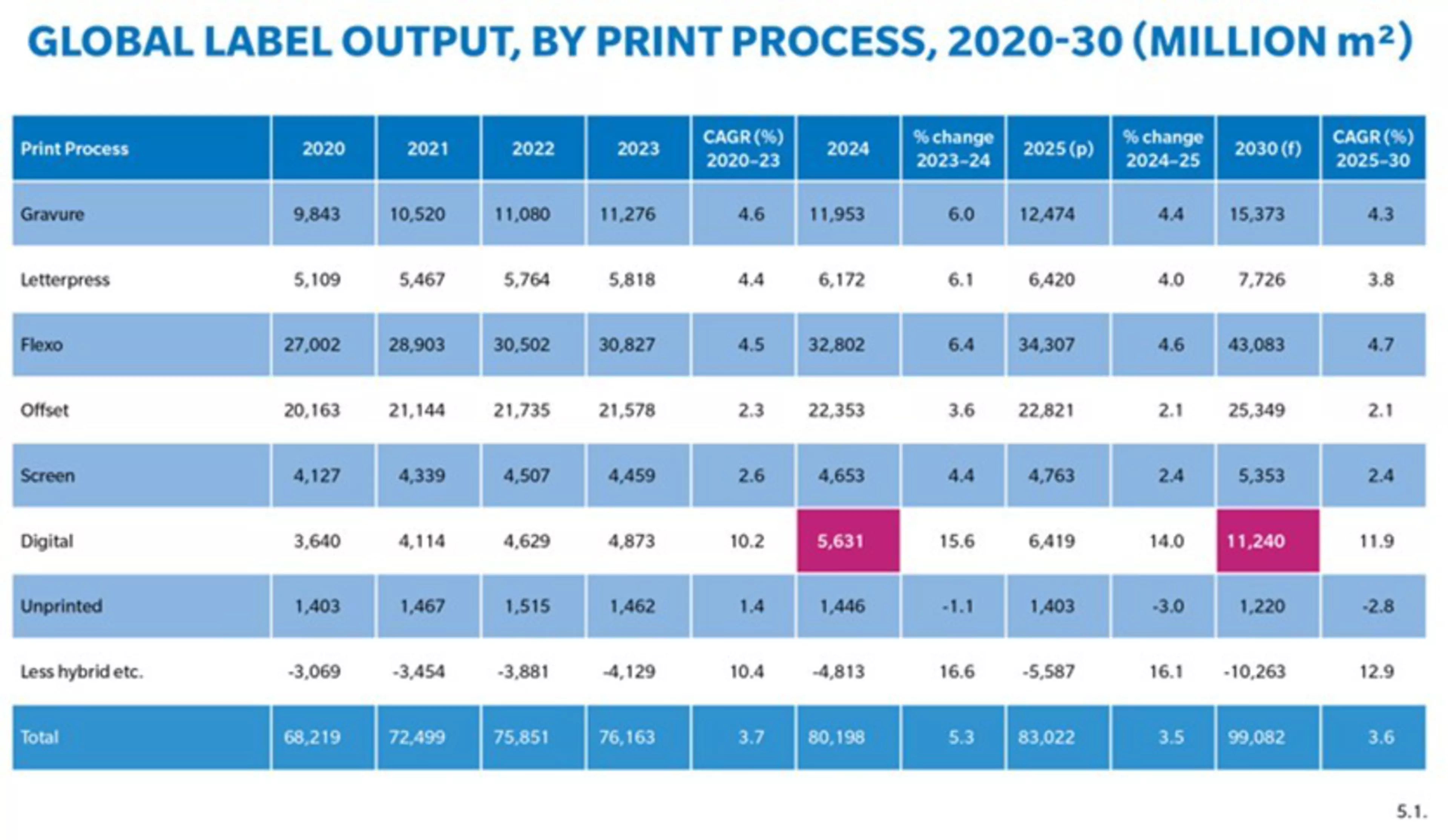
Global digital label output is forecast to double to 11.2 billion square meters by 2030. This is why digital printing is now firmly established as a mainstream label production technology, particularly in the pressure-sensitive segment. While flexography still accounted for around 41% of total volume, according to Smithers1, digital remains the fastest-growing print process.

As table 5.12 shows, Smithers forecasts global digital label output to double from 5.6 billion to 11.2 billion square meters in six years from 2024. Digital will continue to gain ground as converters prioritize flexibility, shorter runs, embellishment options, and reduced waste.

Although global events - from geopolitical instability to fluctuating consumer demand - continue to influence market conditions, digital’s adaptability positions it as a stabilizing force for converters seeking agility and efficiency.

This shift enables converters to change their mindsets from conventional methods, as well as them having a strong focus on driving flexible packaging via a digital route and looking more at the benefits of embellishment.

Digital Transformation Redefining Label Markets

Digital production is transforming label markets by enabling automation, personalization, sustainability, and smarter supply chains. Faster onboarding, reduced inventory, and on-demand customization are becoming hallmarks of modern converter operations.

According to Smithers3, the global label market reached 80.2 billion square metres in 2024 (valued at $46.5 billion) and is forecast to grow to 99.1 billion square metres by 2030. Digital’s market share is expected to more than double from 5.3% in 2020 to 11.3% by 2030, with Western Europe and North America leading adoption.

In Europe, continued regulatory expansion and e-commerce growth are driving steady demand for digital label solutions - with market value projected to reach €19.5 billion by 2027 (IMG research).

Increased Market Share Catching Offset

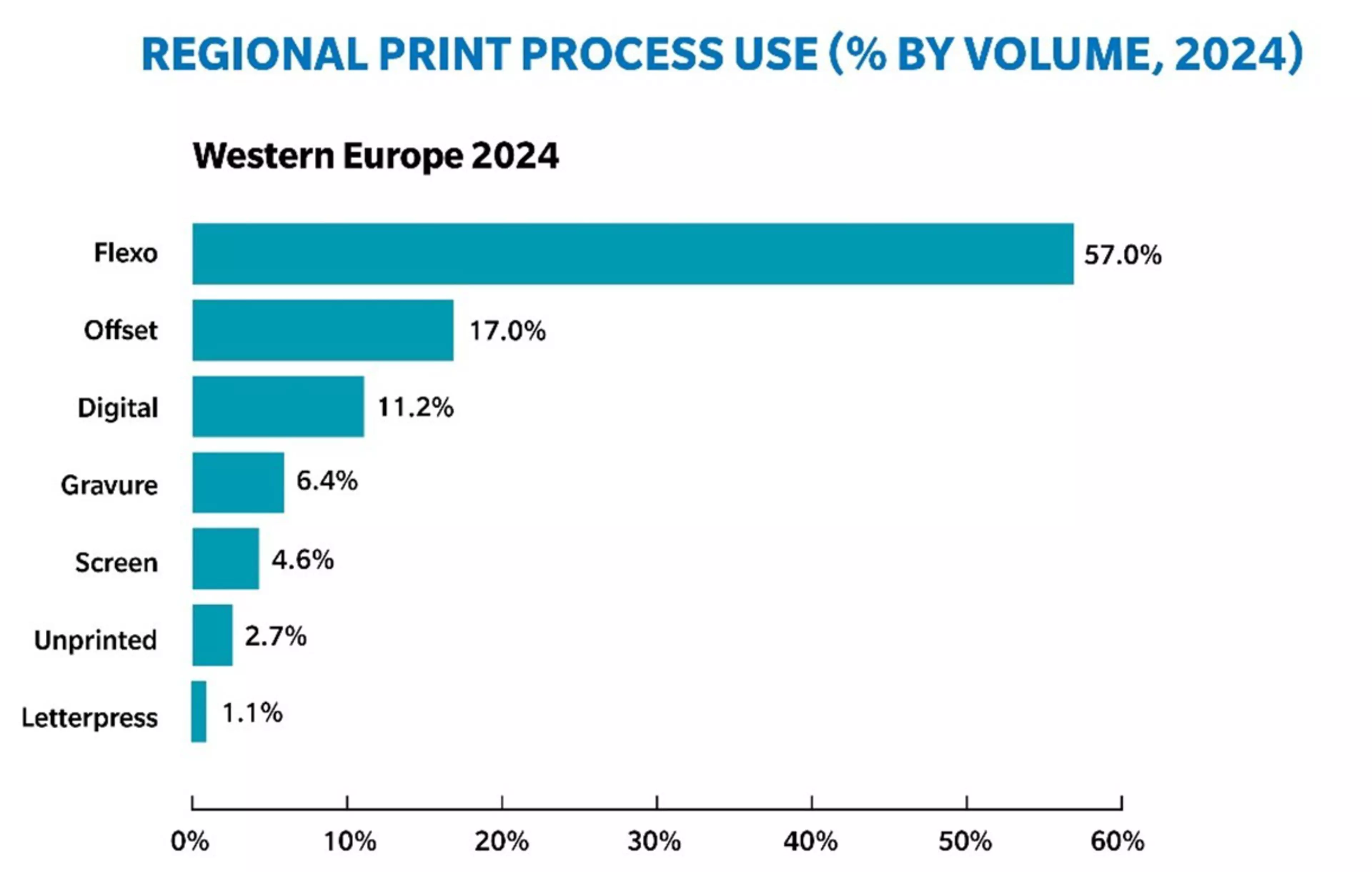
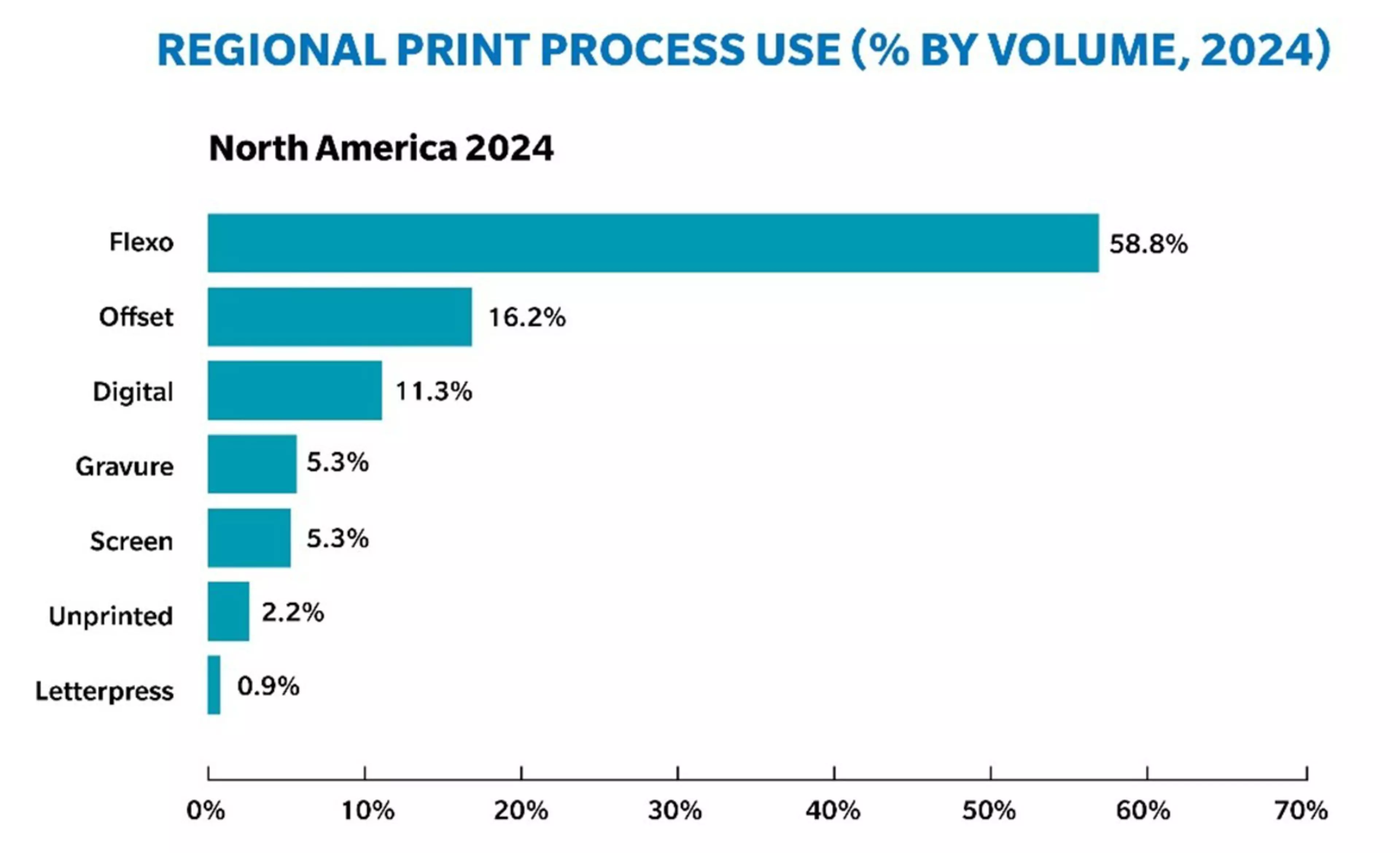
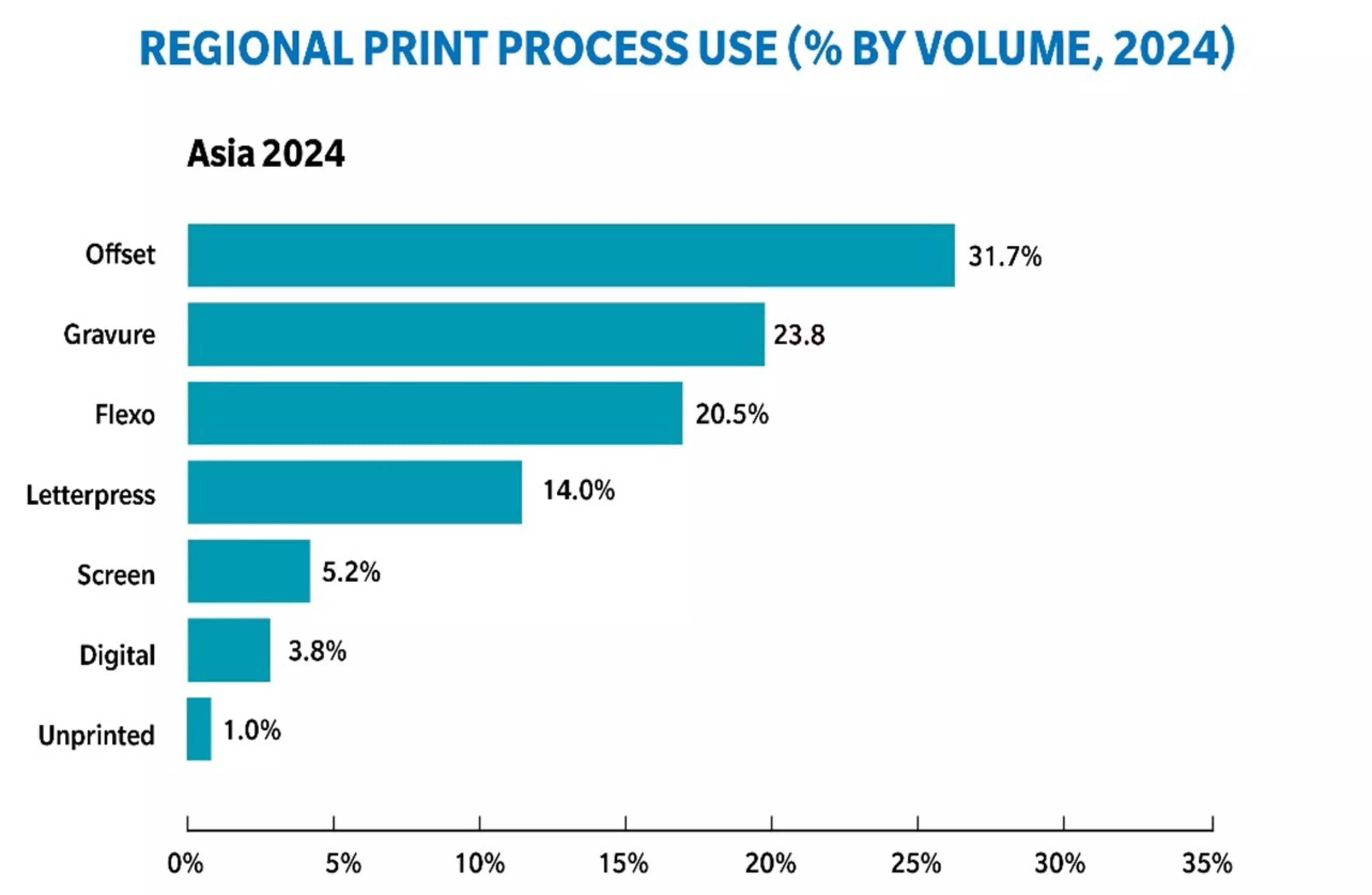
One of the best indicators is the rise in digital volumes for both Western Europe and North America, in third place when compared to other processes, as the tables4 show, and now catching up with offset (17%) with 11.2% and 11.3% respective market share. In Asia-Pacific, digital production (3.8%) still has some catching up. However, it is the fastest-growing region for label printing, with a projected CAGR of 4.81%.

The demand for digital printing in label printing will surge, continuing the significant momentum. It is the fastest growing of all label printing technologies.

Looking Ahead and Shaping a Label Future

As 2026 unfolds, label converters face a market defined by transformation and opportunity. From digital printing and personalization to cloud-based ERP systems and automation, innovation will be key to competitiveness.

In Europe, the overall label market is likely to continue on a ‘cautiously positive trajectory’, according to experts from FINAT Radar5. The sector will be defined more by strategic adaptation, operational efficiency and long-term investment in sustainability and resilience, it says.

As a European market leader in digital label press systems, Konica Minolta continues to build on its strong market position. Recognized by IDC as a leader in digital label press technology - with over 1,700 toner-based AccurioLabel installations worldwide - the company remains committed to advancing automation, productivity, and sustainability in label production.

This is why we look forward to unveiling more details of the new AccurioLabel prototype, designed to take mid-range digital label production to new heights.

The label printing industry is entering an era of accelerated innovation - and digital will be at the heart of it.

Watch this space.

1Smithers, The Future of Labels and Release Liners to 2030, page 75

2Smithers, The Future of Labels and Release Liners to 2030, page 75

3Smithers, The Future of Labels and Release Liners to 2030, page 51

4Smithers, The Future of Labels and Release Liners to 2030, page 74

5“REPORT & ANALYSIS, THE EUROPEAN NARROW WEB MARKET, FINAT RADAR 29, 3RD QUARTER 2025”

Share:

Contact

Andrea Meyer
Andrea Meyer

Communications & Content Manager